


Real customers - real results
"She started singing again"
Georgine Parke
5.0
Seattle
"It healed my mitochondria"
Joel Kastelburg
5.0
Las Vegas
"There’s no question that it works"
Angelo
5.0
New Jersey
Frequently asked questions
What Is Methylene Blue?
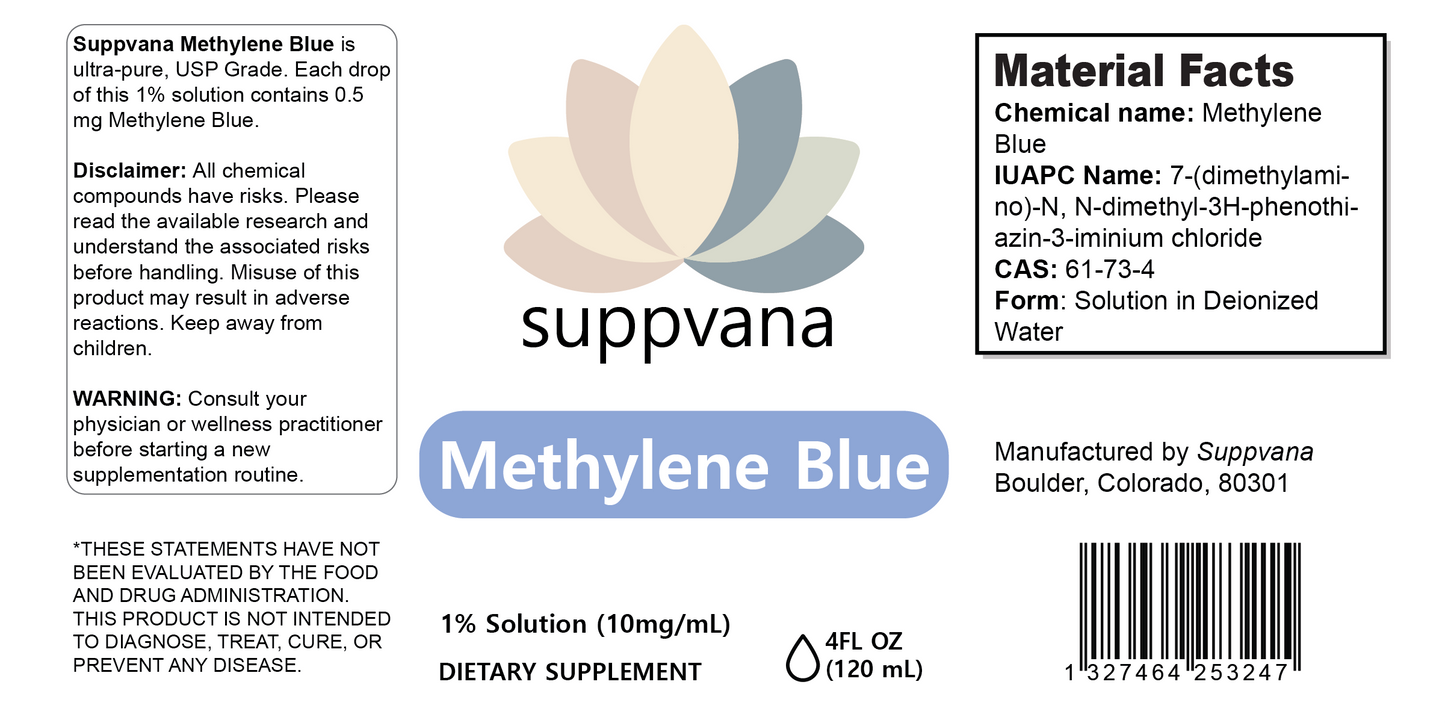
Methylene Blue is a synthetic compound originally developed as a textile dye that later became one of the earliest pharmaceutical agents in medicine. Today it is recognized for its ability to support mitochondrial function, enhance cellular energy, and act as a powerful antioxidant. By improving the efficiency of energy production inside cells, it helps defend against oxidative stress while supporting brain health and mental clarity. Because of its wide-ranging biological effects, methylene blue is increasingly studied in the fields of biohacking, anti-aging, and performance optimization.
What Medical Conditions Are Treated With Methylene Blue?
Methylene Blue has a long history in medicine, where it has been primarily used to treat methemoglobinemia, a rare but serious blood disorder in which hemoglobin cannot release oxygen effectively. In hospital settings, it is also applied in cases of drug-induced toxicity, such as cyanide poisoning, and has been studied as an adjunct in malaria treatment. Researchers are investigating its potential to treat neurodegenerative conditions such as Alzheimer’s and Parkinson’s disease. It has also been explored in sepsis, psychiatric disorders, and other conditions linked to cellular energy dysfunction.
Is Methylene Blue a Nootropic?
Methylene Blue is increasingly recognized as a nootropic due to its ability to enhance brain function by supporting mitochondrial efficiency and improving cellular energy production. Research shows low doses can facilitate memory formation, strengthen recall, and improve overall cognitive performance. Its antioxidant properties help protect neurons from oxidative stress, a key factor in age-related cognitive decline. These effects have led to growing interest in methylene blue within the biohacking and longevity communities, where it is studied for its potential to improve mental clarity, focus, and resilience under high cognitive demand.
Does Methylene Blue Have Any Health Benefits?
Methylene Blue has several health benefits that make it a compound of growing interest in both clinical medicine and biohacking. It enhances mitochondrial function, improves energy production, and supports overall vitality. Its antioxidant properties help neutralize oxidative stress, protecting neurons and tissues from damage associated with aging and disease. Research indicates that methylene blue can improve memory, learning, and cognitive performance, which is why it is increasingly studied as a nootropic. It has also been explored for its role in mood regulation, neuroprotection, and slowing age-related cognitive decline. While its most established medical use remains the treatment of methemoglobinemia, ongoing studies suggest broader applications for brain health, longevity, and performance optimization.
Why Is Methylene Blue Popular Now?
Methylene Blue has gained popularity recently due to its growing reputation as a versatile compound for cognitive enhancement, longevity, and cellular health. The rise of biohacking and high-performance optimization communities has brought attention to its ability to support mitochondrial function, improve energy production, and protect cells from oxidative stress. Research highlighting its potential as a nootropic, neuroprotective agent, and antioxidant has further fueled interest among those seeking mental clarity, improved focus, and healthy aging. Increased media coverage and discussions in scientific and wellness circles have positioned methylene blue as a cutting-edge tool for performance, longevity, and overall health optimization.
Does Methylene Blue Give You Energy?
Methylene Blue supports energy by enhancing mitochondrial function, the cells responsible for producing ATP, the body’s main energy currency. By improving the efficiency of energy production, it helps cells operate optimally, increasing mental clarity, focus, and overall vitality. Its antioxidant properties also protect cells from oxidative damage that can impair energy metabolism. While it is not a stimulant like caffeine, methylene blue’s unique mechanism supports sustainable, long-term cellular energy.
Does Methylene Blue Increase Metabolism?
Methylene Blue supports metabolism by enhancing mitochondrial function, helping cells convert nutrients into usable energy more effectively, which supports overall metabolic processes. Its antioxidant effects reduce oxidative stress that can impair cellular function, further contributing to metabolic health. While methylene blue is not a direct metabolic stimulant such as thermogenic compounds, its ability to optimize cellular energy production and protect tissues from damage makes it a promising tool for biohackers, longevity enthusiasts, and high-performance individuals focused on optimizing metabolism and overall vitality.
Does Methylene Blue Detox Your Body?
Methylene Blue contributes to cellular detoxification by supporting mitochondrial function and reducing oxidative stress, both of which help cells process and neutralize harmful compounds more efficiently. Its antioxidant properties protect tissues from unstable molecules, which can accumulate from environmental toxins, aging, and metabolic processes. While it is not a traditional detox supplement like activated charcoal or liver-supporting herbs, methylene blue’s role in optimizing cellular energy and protecting against oxidative damage positions it as a supportive agent for overall cellular health and resilience.
Does Methylene Blue interact with medications?
Methylene Blue can interact with antidepressants (SSRIs, SNRIs, MAOIs), certain antibiotics, and blood thinners. If you’re taking any prescription medication, consult your doctor before use.
Can Methylene Blue Help IBS?
Methylene Blue has been explored for its potential to support digestive health, including irritable bowel syndrome (IBS), primarily due to its antimicrobial and antioxidant properties. By modulating oxidative stress and supporting cellular energy, it can improve gut function and resilience. Additionally, its activity against certain pathogens suggests it can assist in addressing microbial imbalances that contribute to IBS symptoms. While research in this area is still limited, methylene blue’s effects on cellular health and microbial regulation make it an area of growing interest for gut health.
How Long Does It Take for Methylene Blue to Kick In?
Methylene Blue’s effects can vary depending on the dose, formulation, and individual physiology, but many users report noticeable cognitive and energy benefits within 30 to 60 minutes of oral administration at low, controlled doses. Its impact on cellular energy and mitochondrial function begins almost immediately, though effects on mental clarity and focus can take up to a few weeks. Factors such as weight, metabolism, and concurrent nutrient status can influence the onset and intensity of effects. Because of its potent bioactivity, careful dosing is essential to optimize benefits while minimizing side effects.
Can You Take Methylene Blue Every Day?
Methylene Blue can be taken daily at low doses. Many people incorporate it into their day to day routine to support mitochondrial function, cognitive performance, and overall cellular health. While it is generally well-tolerated at these doses, prolonged or high-dose use can increase the risk of side effects such as urinary discoloration, headaches, or, in rare cases, interactions with certain medications. Current research suggests that tolerance does not develop, meaning its benefits on energy and cognition can persist with consistent use. Monitoring dosage and cycling use is recommended to maintain safety and effectiveness.
What Time of Day Should You Take Methylene Blue?
The optimal time of day to take Methylene Blue depends on your goals and sensitivity, but most users find morning or early afternoon ideal to maximize its effects on energy, focus, and cognitive performance. Taking it earlier in the day aligns with natural circadian rhythms and reduces the risk of sleep disruption since its mitochondrial and nootropic benefits can increase alertness. Some prefer splitting low doses across the day to sustain cellular energy and mental clarity, while others take a single dose with breakfast or lunch for convenience. Adjusting based on personal response is recommended for optimal results.
Is Methylene Blue Safe to Take Orally?
Methylene Blue is generally considered safe. When used at low doses under proper guidance, methylene blue can support mitochondrial function, cognitive performance, and cellular health with minimal risk of side effects. In rare cases, serious side effects may occur while taking selective serotonin reuptake inhibitors (SSRIs) or MAO inhibitors, including life-threatening conditions such as serotonin syndrome. Methylene Blue is not intended for patients who are pregnant, breastfeeding, or G6PD deficient. Some users may experience a Herxheimer (HERX) reaction, which may include fatigue, nausea, headaches, or muscle pain. Always consult with a healthcare provider before use.
Is Methylene Blue FDA Approved?
Methylene Blue is FDA-approved for specific medical uses, primarily for treating methemoglobinemia and certain drug-induced toxicities. Research continues to explore its broader applications in mitochondrial support, neuroprotection, and cellular energy optimization. High-quality pharmaceutical-grade formulations adhere to strict purity and safety standards. Third-party testing ensures transparency and reliability.